
What is Embodied Intelligence?
"Seek Not Love, Instead merely seek all the barriers you have built against it." -Rumi
Embodied Intelligence is a way of being that helps us meet life as it is, with receptivity, curiosity, and presence. It invites us to turn toward both beauty and heartbreak. To grieve what we love. To seek the truth of our experience and follow our aliveness.
It is an integrative approach to human wholeness that values receptivity, grief, and belonging as essential to well-being. It recognizes that trauma and survival patterns often veil our innate capacity to feel held and connected.
Through inner work, embodied presence, and relational practices, we can soften protective defenses, metabolize loss, and rediscover a sense of safety and sacredness in everyday life. This way of being fosters resilience, creativity, and authentic connection with ourselves, others, and the living world.
This page offers a snapshot of the themes and values shaping this work. A living constellation rather than a finished map.
Because this body of work is alive and dynamic, what is centered will continue to shift and deepen.
Embodied Intelligence is not only a philosophy but a practice. Through ritual, movement, inquiry, and community, these principles become lived realities in daily life.
Core Pillars of Embodied Intelligence
1. Receptivity
- A foundational posture of openness—toward ourselves, one another, and the living world.
- Opening to what is alive in the present, joy, fear, grief, numbness, beauty, and the mundane.
- With curiosity and compassion, turning toward the internal barriers we carry: our habits, defenses, and fears, understanding them as adaptive survival strategies shaped by life experience.
- Receptivity is not passive but a courageous willingness to be touched by life, to soften defenses, and to meet reality as it is.
- From this posture, creativity, compassion, and resilience naturally emerge.
2. Turning Toward What Is Present
- Learning to meet what is arising, not to fix or bypass, but to be with it.
- Recognizing life’s challenges: uncertainty, depression, grief, illness, and other hardships, as invitations into soul depth rather than signs of failure.
3. Grief as Soul Practice
- Grief is not something to “get over,” but a practice of love. A testimony to what matters most.
- Grief is love made visible, our ache testifies to what matters.
- Turning toward grief keeps us human, tender, and connected; suppressed grief breeds numbness, violence, and despair.
- Grief metabolized in community restores belonging and strengthens our capacity for joy.
4. Belonging, Re-Membering, & Decolonized Attachment
- We are not isolated selves, but are woven into a vast web, with ancestors, earth, nature, cosmos, the divine, and each other.
- To remember this belonging is to return home.
- Healing comes not through rugged individualism but through re-connection with the sacred community of life.
- Ritual and communal practices root us back into this belonging.
- A decolonized approach to attachment understands bonding and belonging as arising within a vast relational field—including ancestors, community, culture, faith/spiritual practices, land, and history—rather than only the nuclear family.
- Healing centers on reclaiming these connections disrupted by colonization. (For more on this approach, see this recommend podcast with Linda Thai hosted by the organization SAND) https://scienceandnonduality.com/audio/69-rethinking-attachment-towards-relational-wholeness/
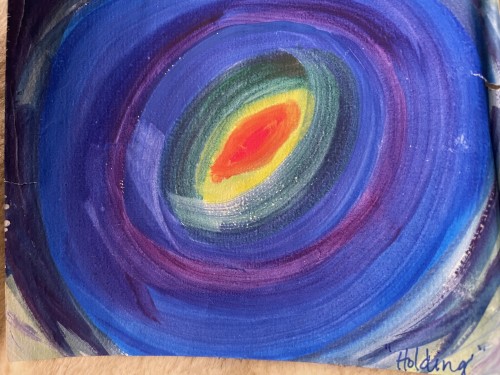
5. The Holding Nature of Reality
- Beneath fear and survival strategies lies a benevolent, nourishing ground of being.
- This ground can be experienced as steady, attuned, loving, spacious, and holding.
- Though veiled when we live in survival mode, this presence is always here.
- Embodied practices help us sense this holding even in dark times.
- Presence, compassion, and inquiry help us re-access this grounding reality.
6. Immanence
- The sacred is not distant or elsewhere, it is here now, pulsing in breath, body, earth, beauty, and loss.
- Transcendence is not escape from human vulnerability but is braided into the immanent fabric of life.
- Living with Embodied Intelligence is awakening to the aliveness of the ordinary and the sacred woven through all things.
7. Curiosity as Practice
- Curiosity softens the grip of certainty and control.
- Meeting what arises with wonder opens us to growth, connection, and creativity.
- Curiosity is a spiritual practice of turning toward rather than fixing, dominating, or fleeing.
- This practice softens inner and outer defenses.
Overarching Values of Embodied Intelligence
1. Immanence as Sacred
- The divine is not elsewhere; it saturates breath, sensation, grief, joy, soil, and stars.
- Immanence is the presence of the sacred within everything that exists — our bodies, emotions, relationships, and the natural world.
- Transcendence, in this framing, is not a flight away from vulnerability but the depth that shines through human experience.
- Transcendence without immanence is spiritual bypassing-using spiritual ideals to avoid pain, vulnerability, or the messiness of ordinary life.
- Transcendence braided with immanence meets in the living body and awakened heart.
2. Embodied Presence & Inquiry
- Truth is encountered through lived, felt experience rather than concepts or fixed identities.
- The body is a portal—a living field of intelligence—guiding us into presence.
- Life’s thresholds—grief, rage, longing, suffering—are gateways to deeper becoming.
- Practices of turning toward invite intimacy with all that arises rather than bypassing, judging, or rejecting.
- Grounded awareness and somatic inquiry help us meet each moment—shadow and light—as a path to wholeness and freedom.
3. Honoring Wisdom Traditions
- Draws from mystical Christianity, the Divine Feminine, Sufism, Buddhism, Indigenous, and Animist traditions.
- Recognizes these as living streams of insight into our shared human journey.
- Restores connection and fosters reciprocal relationship with creation, ourselves, and each other.
- Honors a common heart of truth that transcends culture and time.
- Invites living in reciprocity with the earth and future generations.
4. Trust in the Descent
- Life moves as a living spiral, carrying us through contractions and expansions, endings and beginnings.
- Embodied Intelligence honors these rhythms and invites trust in the downward arc.
- Recognizes suffering, death, and rebirth as sacred phases of the journey.
- Meeting the shadow and the long-exiled parts of ourselves becomes a rite of passage toward embodied wisdom and eldership.
5. Creative Becoming
- Every unraveling, every loss, holds seeds of new life.
- To live with Embodied Intelligence is to trust the creative intelligence of life itself as it moves through us.

Tending the Harvest of Grief & Gratitude residential retreat at St. Francis Springs Retreat Center
To learn more about coming home to the authenticity of your heart through individual and community based grief tending rituals click the link here.